How to Visit the Weligama Stilt Fishermen (Ethically & Without Crowds)

Nisala Jayawardena
Travel Writer

The image of a lone fisherman perched precariously on a wooden pole, silhouetted against the fiery glow of a Sri Lankan sunrise, is perhaps the most enduring and romanticized symbol of the island’s coastal life. These are the famous stilt fishermen, or Ritipanna in Sinhalese, and while many believe this is an ancient art, the truth is a fascinating story of ingenuity, resilience, and modern adaptation. Visiting them from Weligama is an absolute highlight, provided you approach the experience with respect and the right timing.
A Tradition Born from Necessity
The practice of stilt fishing did not originate in antiquity. It is believed to have begun during the lean years following World War II, when food shortages and overcrowded fishing spots forced ingenious locals to find a new way to access the shallow, coral rich waters off the south coast. They adapted the idea of using sunken wreckage as platforms, eventually evolving it into the specialized stilt, or petta, planted firmly in the seabed. Sitting still and silent high above the water reduces their shadow, preventing the small fish like spotted herring and mackerel from being alerted.
Today, this traditional method faces modern challenges. The 2004 tsunami permanently altered the reef systems, reducing the viability of fishing in many spots. Consequently, for many fishermen, the practice has transitioned into a cultural performance, where posing for tourist photographs has become a vital supplement to their income. Understanding this reality is the first step toward having an authentic and ethical encounter.
Timing Your Visit to Beat the Crowds
The easiest way to find yourself sharing the view with dozens of tour buses is to visit during the middle of the day. To witness the fishermen in action, or at least in the most atmospheric light, you must commit to the golden hours.
The best time for an authentic viewing experience is the early morning, typically just before or after sunrise and continuing until about 9:00 AM. This is when the fishermen who still rely on the catch for their families or for local sales are most likely to be genuinely fishing. The light is also soft, and the roads are quiet.
The late afternoon session, starting around 4:00 PM and lasting until sunset, is often the most crowded time, as it offers the most dramatic light for photography. While the golden hour silhouettes are stunning, be prepared for a more overtly commercial atmosphere as many individuals will be actively posing for a fee.

The Ethical Photographer’s Code
When you approach the areas where the stilts are visible, you will often be met by a local guide or the fishermen themselves. Remember that for many, posing for your camera is their primary income from this activity.
- Payment is Mandatory: Do not take photographs without offering payment. A small, agreed upon fee for a few minutes of viewing or photographing is customary. View this exchange not as a transaction for a photo, but as a direct contribution to preserving the visual tradition and supporting the local community.
- Ask First: Always negotiate the price before you start taking pictures. Be friendly, courteous, and polite. A little conversation can often lead to a more personalized and memorable experience.
- Maintain Distance: If you wish to capture a sense of the peaceful isolation without disturbing the experience, use a telephoto lens and observe from a respectful distance on the road or shore. This is also the best way to avoid the crowds clustered around the most accessible stilts.

Finding the Quieter Spots near Weligama
The most famous stretch of stilt fishermen is not actually in Weligama Bay itself, but rather just a short distance east, in areas like Ahangama and Koggala. While the section of beach at Weligama’s eastern end sometimes features stilts, the concentration is higher along the next few kilometers of the coast.
To find a truly uncrowded spot, consider hiring a local tuk tuk driver and asking them to take you to a less famous line of stilts away from the main roadside hubs. Look for the stilts in the water, stop your vehicle safely, and approach the shoreline quietly.
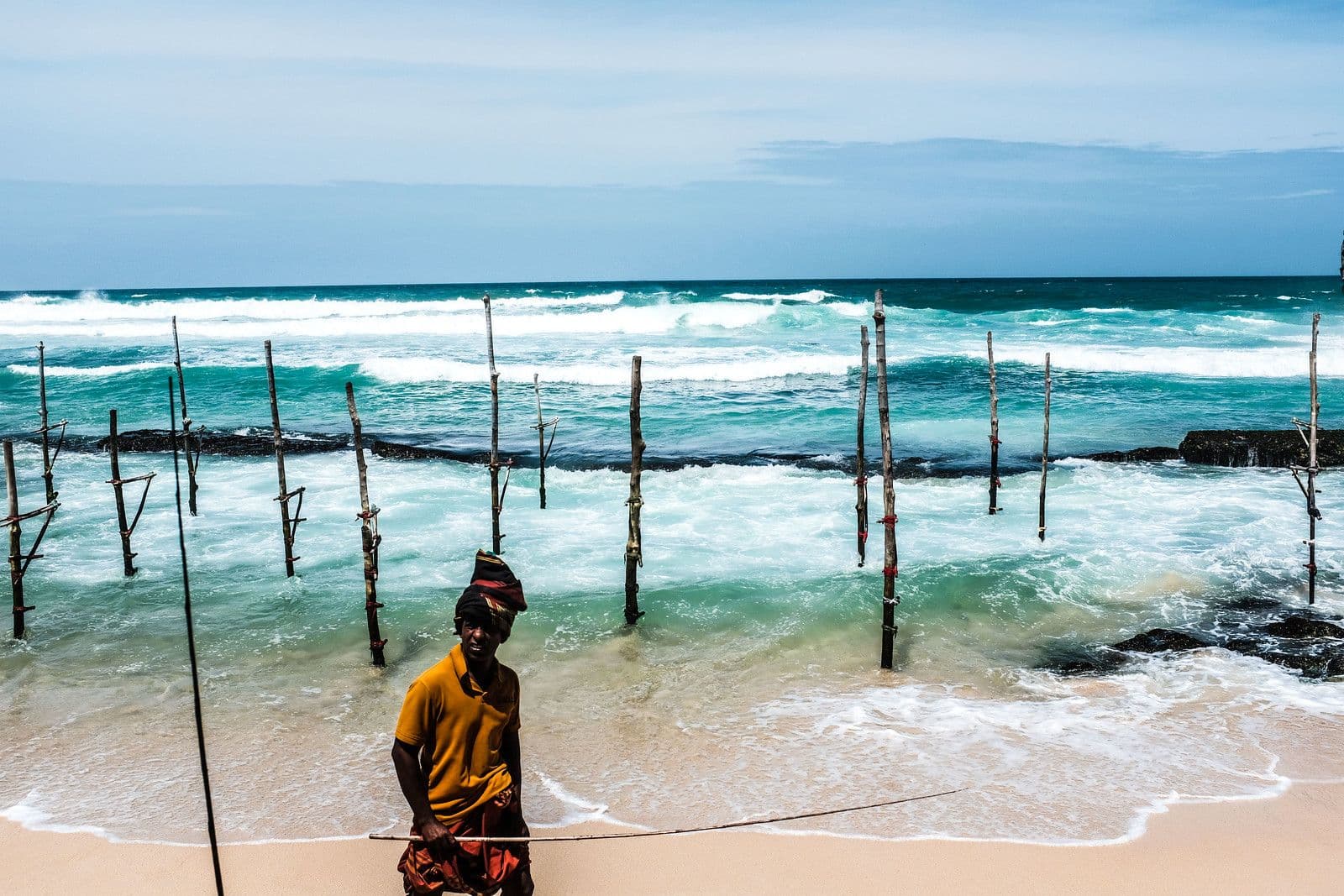
The stilt fishermen are a living, evolving piece of Sri Lanka’s history. By approaching them ethically, engaging respectfully, and timing your visit carefully, you can move beyond the tourist rush and capture a true sense of the patience and resilience that define this iconic coastal community.
Enjoyed this story? Share it
About the Author
Nisala Jayawardena
A passionate heritage explorer and travel storyteller dedicated to uncovering the sacred history, world-class surf breaks, palm-fringed beaches, and the vibrant coastal culture of Weligama — Sri Lanka's surfing paradise.